
The HR Rules Engine for Odoo 17 Payroll and Attendance
Most payroll problems are not really payroll problems. They are change-request problems. A grace period needs to move by five minutes, a new grade needs its own overtime rule, a site wants different rounding, and every one of those small changes turns into a developer ticket and a wait. To end that pattern, we built […]
From Weighbridge to Odoo 17: Accurate BOM Costing, Budget vs Actual, End to End

For any operation that buys raw materials in bulk — cement, sand, aggregates, steel of every size — the weighbridge is where the money story begins. Yet in most plants that data lives in a silo: printed tickets, spreadsheets, or a standalone system that never talks to the ERP. The cost of that gap shows […]
The 505 ms Lie: The SQL Server Factors Everyone Ignores Until Growth Breaks Them
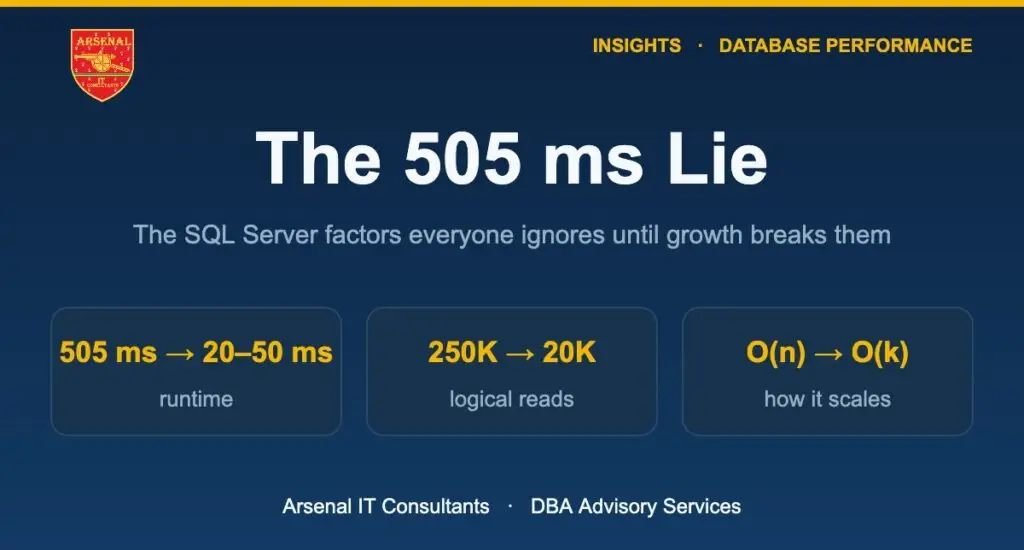
A stored procedure ran in 505 ms and everyone said it was fine. It was one growth spurt from a production incident. The SQL Server backend factors teams ignore — and the best practices that cut runtime up to 25x.
Customising ERPNext Version 16: A Two-Layer Payment Approval Workflow for Complete Control
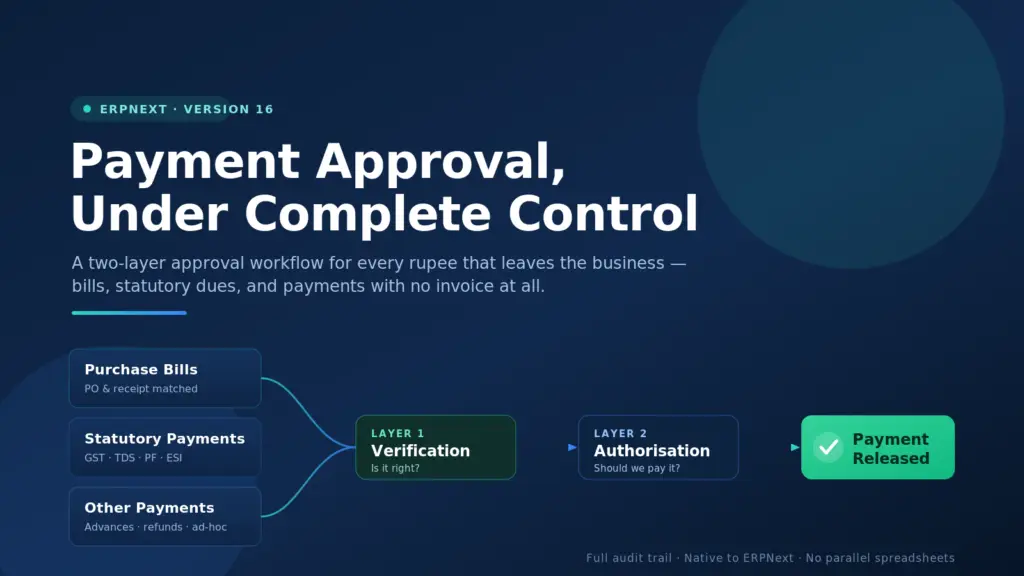
How we customised ERPNext Version 16 to route every payment — purchase bills, statutory dues, and non-invoice payments alike — through a two-layer verification and authorisation workflow, giving finance complete control over what gets paid and by whom.
SQL Server Transactional Replication: Why Moving the Distributor Off the Publisher Can Improve Performance
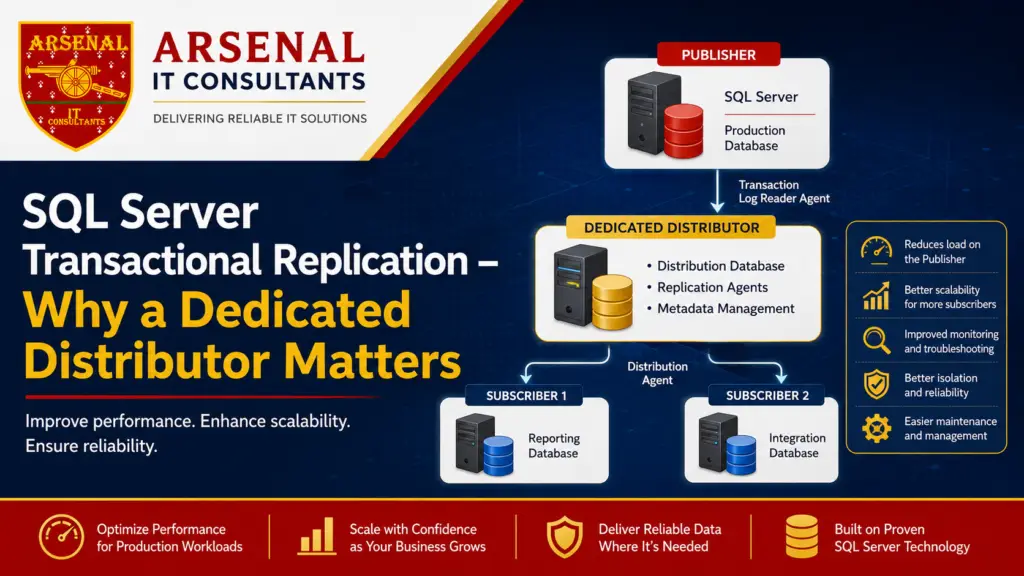
Introduction SQL Server Transactional Replication has been one of Microsoft’s most dependable technologies for near real-time data synchronization for over two decades. Whether the objective is reporting, disaster recovery, branch office synchronization, or application integration, replication remains a preferred solution because of its low latency and proven reliability. One architectural decision that is often overlooked […]
When the Database Becomes the Ceiling: Tuning a Finance Company’s Loan Platform Without Rewriting It
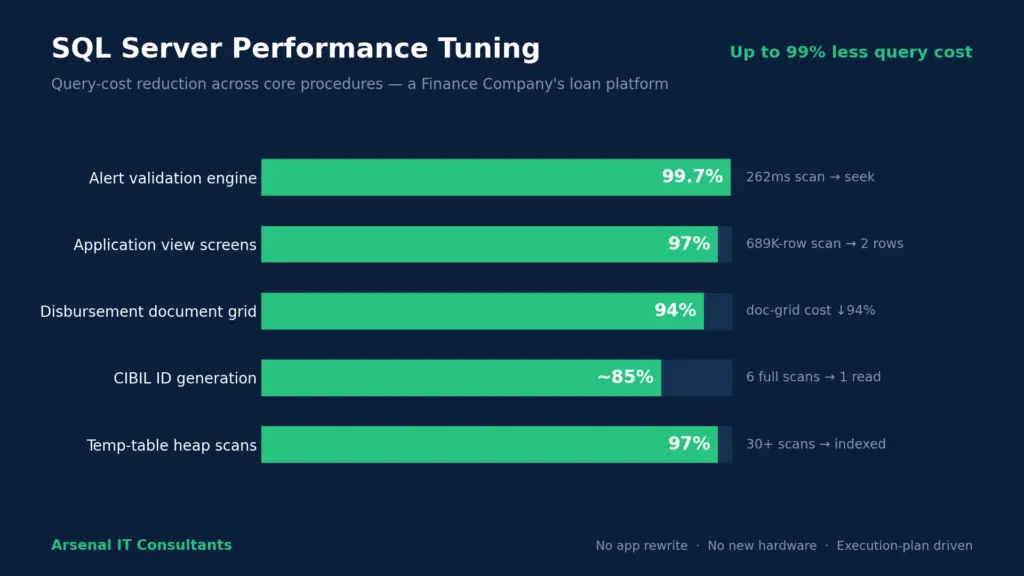
Most “slow application” complaints don’t start in the application. They start in the database — in a query quietly doing far more work than anyone realises. The screen feels heavy, users blame the network or the server, and everyone slowly learns to wait. We recently worked with a finance company whose loan origination and disbursement […]
How We Customised Odoo to Make Compliance Automatic — Even When Teams Are Busy
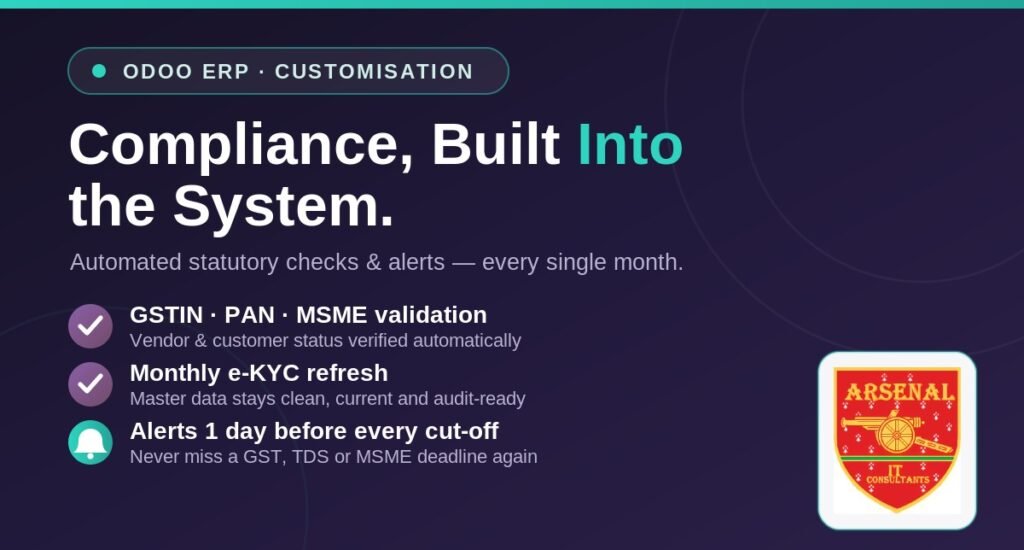
For most small and medium businesses, compliance doesn’t fail because people don’t care. It fails because people are busy. A GST cut-off lands on the same day as a customer escalation. An MSME payment timeline quietly passes while the team firefights a production issue. A vendor’s GSTIN gets cancelled and nobody notices until a return […]
When Production Starts Before the BOM Is Ready: Staged Release in Odoo 17
How we configured Odoo 17 to release a 160-item BOM in stages — with multiple material issues inside each stage — instead of waiting for everything to land. That was the real question from an Indian Railways electrical contractor whose Odoo 17 manufacturing setup we built at Arsenal ITC. Their product is assembled in stages […]
One Product, Many BOMs: Modelling Discrete Bills of Material in Odoo for Precast Manufacturing
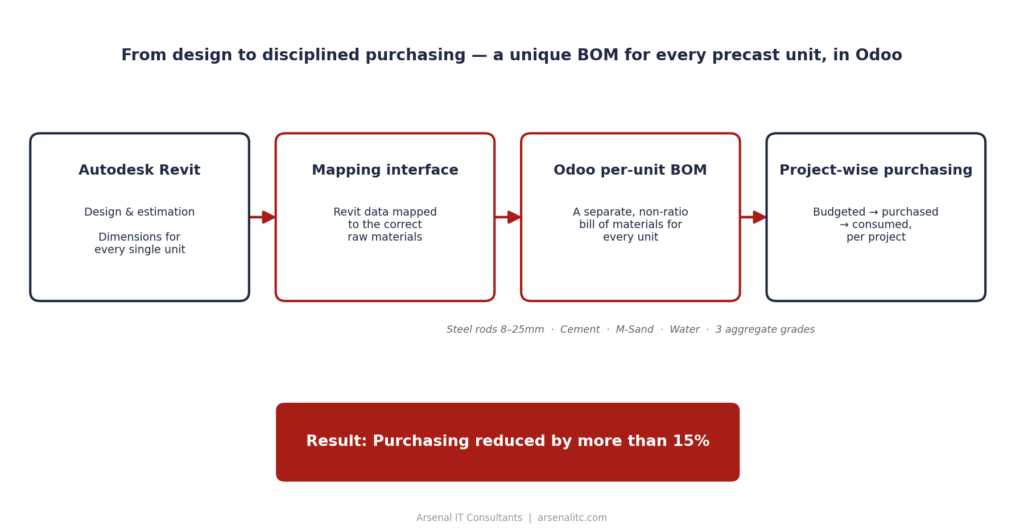
To anyone outside the factory, one hollow core slab looks much like another. Inside a precast concrete operation, that resemblance is misleading — and it is exactly where most ERP implementations come undone. We recently worked with a precast concrete manufacturer producing eight product lines: hollow core slabs, retaining walls, solid slabs, staircases, precast walls […]
From Calendar to Evidence: Using Pareto Analysis to Prioritise Equipment Maintenance under IATF 16949
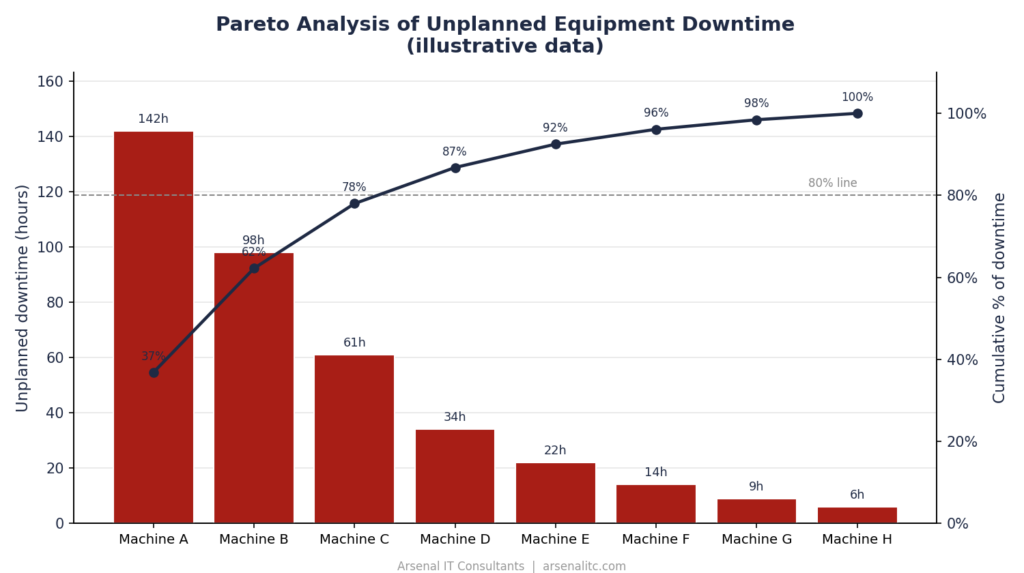
Most small and mid-sized manufacturers maintain their equipment the same way they always have: on a fixed calendar. Every machine gets serviced every few weeks, whether it needs it or not. It feels disciplined. In practice, it quietly wastes effort on healthy machines while under-protecting the ones that actually decide whether the production line runs. […]